Serengeti in February
Peak calving and predator action in the green heart of Tanzania.
The Great Migration's Calving Spectacle
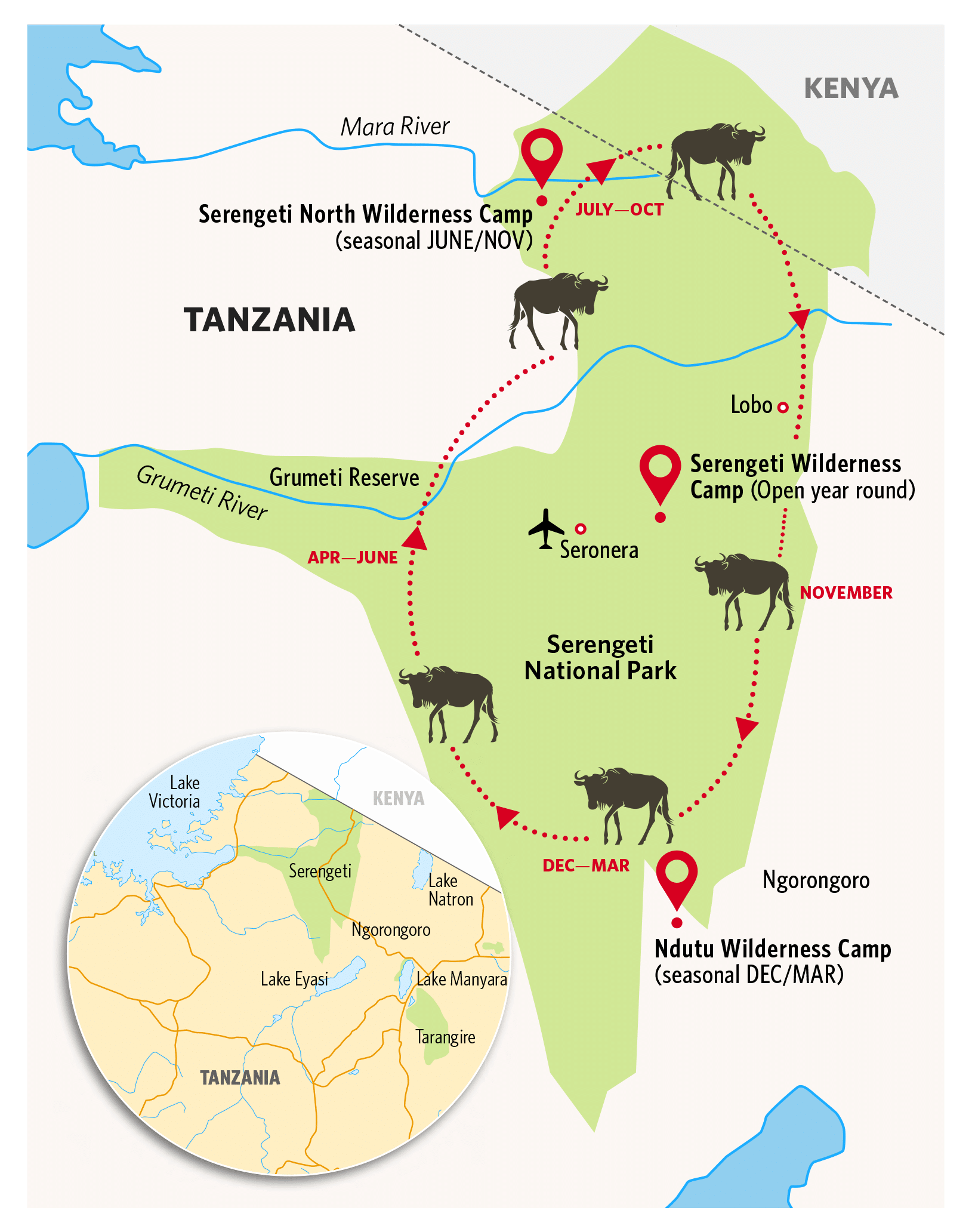
February in the Serengeti places our guests right in the heart of the Great Migration's most tender and dramatic phase: the calving season. The vast wildebeest herds, accompanied by zebras and gazelles, remain concentrated in the southern plains, primarily around the Ndutu region and stretching towards the Ngorongoro Conservation Area boundary. This is where millions of newborns take their first wobbly steps onto the savanna, a truly astounding sight. We arrange our private safaris to position you perfectly for witnessing these incredible scenes, allowing ample time for observation and photography of the new life flourishing across the emerald landscape. Our expert guides, deeply familiar with the migration patterns, know precisely where to find the densest concentrations, ensuring you experience the full majesty of this natural phenomenon under our glatt-kosher standards, with every detail meticulously handled by the Levy family team.
Predator Paradise and Photographic Gold
With an abundance of vulnerable young, February transforms the southern Serengeti into a predator's paradise. This is unequivocally peak predator month, offering unparalleled opportunities to observe cheetahs, lions, and hyenas in action. The open plains provide excellent visibility as these skilled hunters stalk their prey, creating powerful and often poignant wildlife encounters that speak to the raw beauty of nature's cycle. Our guides are adept at anticipating these moments, positioning your vehicle for optimal viewing without disturbing the animals. For photographers, February offers a distinct advantage: the short rains have painted the landscape in vibrant greens. Imagine capturing a majestic lioness with her playful cubs against a lush, verdant backdrop, a stark and beautiful contrast to the dry-season browns. The soft,