Serengeti in January
Calving season — witness 8,000 wildebeest born per day on the southern plains.
Witness Nature's Greatest Spectacle: Calving Season in Ndutu
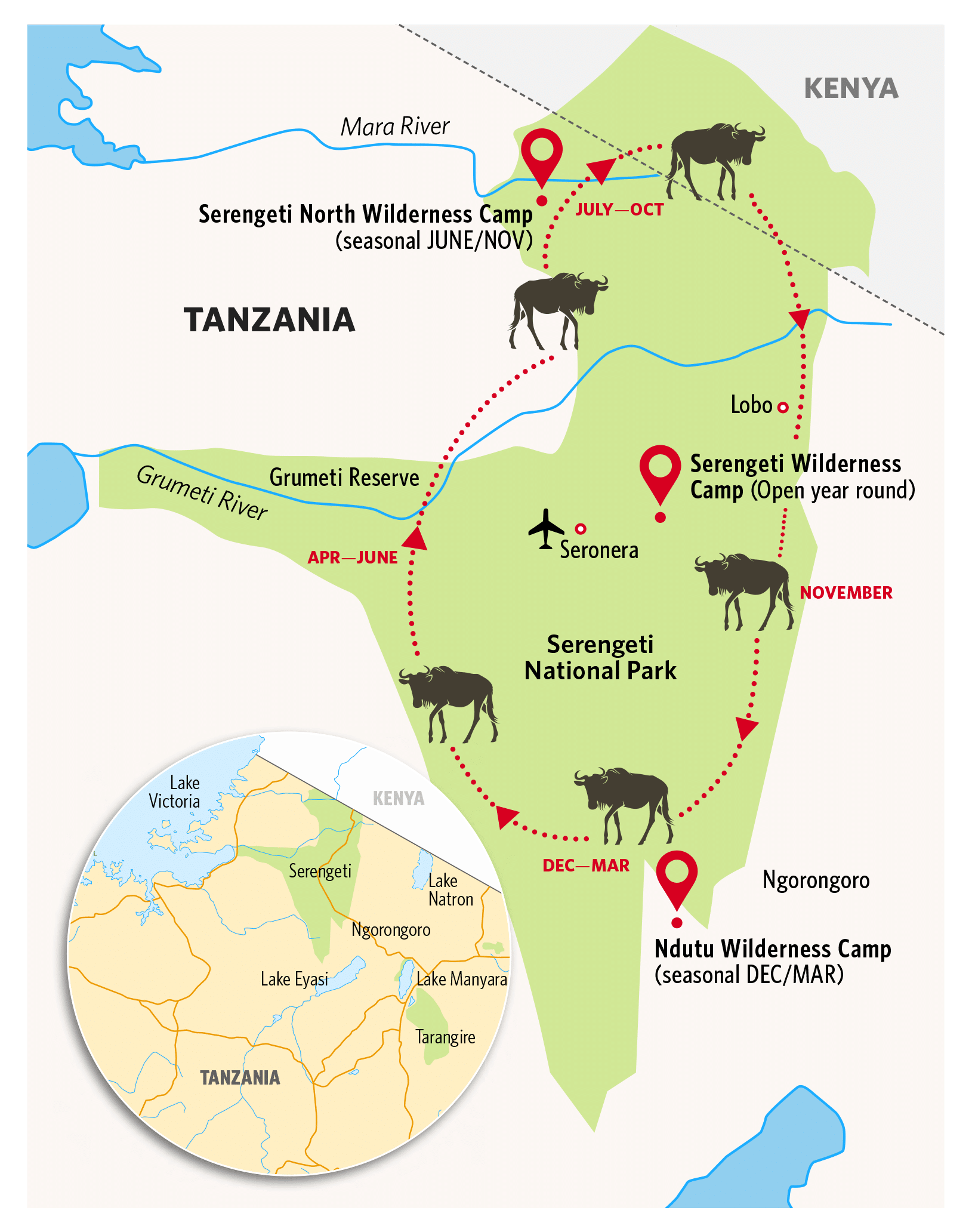
January in the Serengeti is a truly extraordinary time, offering a spectacle unlike any other. This is the heart of the calving season, when the vast short-grass plains of Ndutu, in the southern Serengeti, become the nursery for the Great Migration. Imagine thousands upon thousands of wildebeest, zebra, and gazelles converging here, giving birth to over 8,000 wildebeest calves every single day. The plains are teeming with new life, a vibrant testament to nature's cycle.
This abundance of vulnerable newborns naturally attracts the Serengeti's top predators. Lions, cheetahs, and hyenas are incredibly active during January, constantly on the hunt for an easy meal. Our expert guides will position you perfectly to observe these dramatic interactions – from a mother wildebeest fiercely protecting her calf to a cheetah's lightning-fast chase across the open plains. It's an intense, moving, and profoundly real safari experience that truly brings the wild to life.
Embrace the Lush Green Season
While many envision the Serengeti as dry, golden plains, January presents a different, equally magnificent picture. This is the "green season," when the occasional rains transform the landscape into a lush, vibrant emerald expanse. The air feels fresh, the grass is high, and the trees are full. These verdant surroundings provide stunning contrast for photography, especially with the dramatic, cloud-filled skies that often accompany the afternoon showers.
Beyond the breathtaking scenery, the green season offers several advantages for our guests. With fewer tourists visiting compared to the peak dry months, you'll enjoy a more intimate and exclusive safari experience. This often translates into better availability for prime viewing spots and a sense of having the vast Serengeti almost to yourselves. Furthermore, traveling during this period can often mean more favorable rates for accommodations and flights, making your luxury glatt-kosher safari even more accessible.
Your Bespoke Kosher Safari in Ndutu
To fully immerse our guests in the calving season, The Kosher Safari strategically positions our luxurious mobile camps directly within the Ndutu area. These aren't just tents; they are fully appointed, spacious accommodations with comfortable beds, en-suite bathrooms, and all the amenities you'd expect from a high-end lodge, all while being mobile enough to follow the migration's pulse.
Our commitment to your spiritual and dietary needs is paramount:
- Glatt Kosher, Mehadrin Catering: Our dedicated kosher chef travels with us, preparing three delicious, freshly cooked meals daily right in camp. From hearty breakfasts before your morning game drive to gourmet dinners under the stars, every dish is prepared to the highest kashrut standards.
- Full-Time Mashgiach: A dedicated mashgiach is always on hand, supervising every aspect of food preparation and ensuring strict adherence to all halachic requirements, from ingredients to serving.
- Shabbat and Holiday Support: We meticulously plan every detail to ensure a meaningful and restful Shabbat. This includes a private space for davening, pre-arranged meals, and a complete cessation of travel and activities from candle lighting until Havdalah. Our team is fully trained to support your observance, allowing you to focus on spiritual rejuvenation amidst nature's grandeur.
We handle all the logistics, from private charter flights to expert guiding, ensuring your focus remains solely on the incredible wildlife and the comfort of your kosher safari experience.
January Weather and What to Expect
In January, the Serengeti generally experiences warm days and pleasant evenings. Daytime temperatures typically range from the mid-70s to low 80s Fahrenheit (24-29°C), while nights are comfortably cooler, often dropping into the 60s (15-20°C). As part of the green season, you can anticipate occasional afternoon showers. These are usually short-lived, refreshing downpours that quickly pass, leaving behind a sparkling, vibrant landscape and often leading to spectacular sunsets.
We recommend packing light layers for varying temperatures, along with a waterproof jacket or poncho for those brief rain showers. Don't forget a wide-brimmed hat, sunglasses, and plenty of high-SPF sunscreen. While it's a different experience from the classic dry-season imagery, witnessing the Serengeti in January is a profound immersion into the raw, powerful beauty of creation, teeming with life and dramatic encounters.