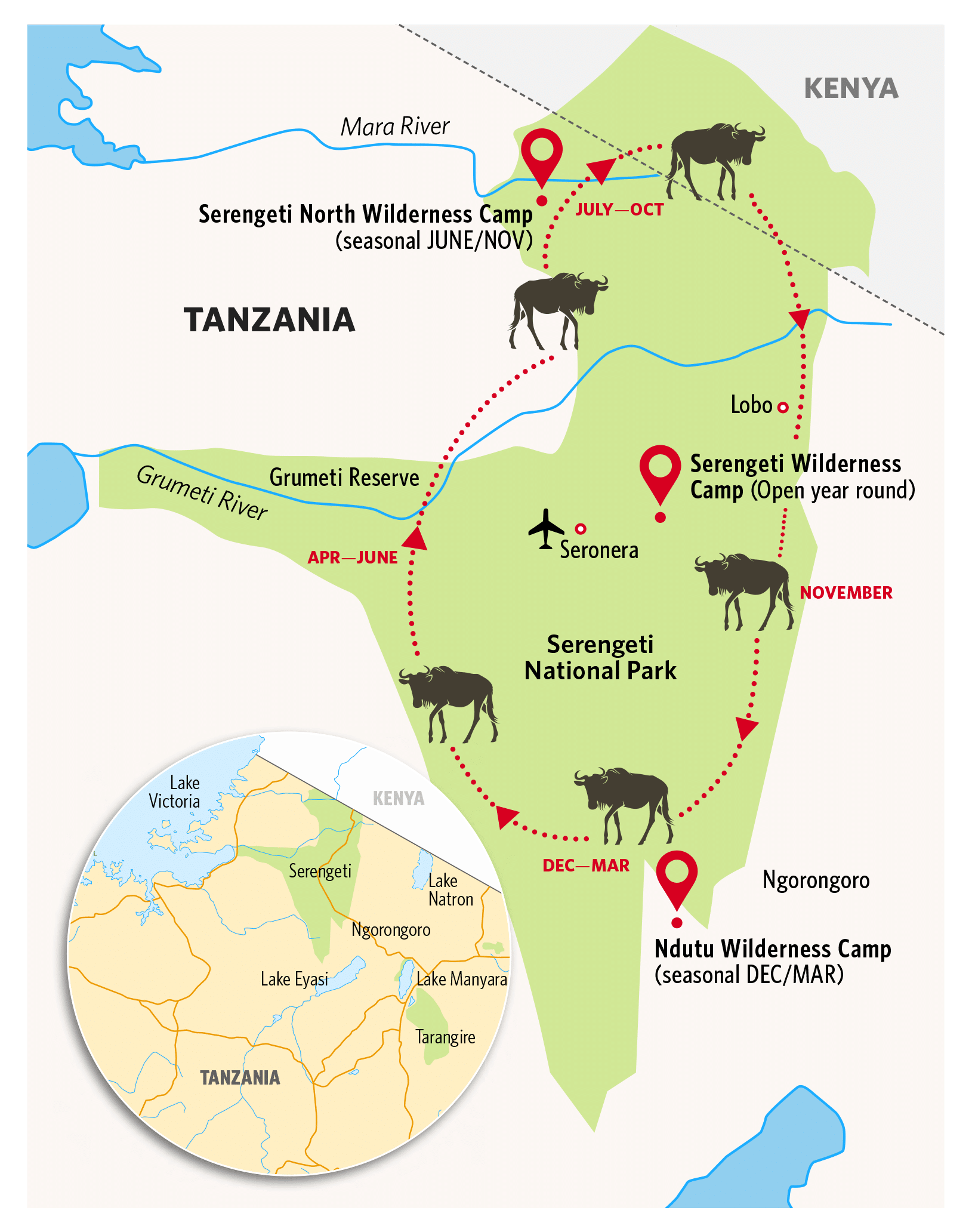
Serengeti in November
Short rains begin — the herds return south and the cycle restarts.
The Great Migration's Southward Journey
As November unfolds in the Serengeti, we witness one of nature's most compelling spectacles: the Great Migration beginning its journey south from Kenya's Maasai Mara. This is the month when the mvuli, or short rains, begin to refresh the northern and central plains, signaling to the vast herds of wildebeest and zebra that it's time to move towards the greener pastures of the southern Serengeti and the Ndutu calving grounds.
In early November, our guests might still catch the tail end of the dramatic Mara River crossings in the northern Serengeti, a truly captivating display of endurance and instinct. However, the primary focus for the month shifts to observing the herds as they fan out across the northern and central regions, steadily making their way south. By late November, the wildebeest typically arrive in the central Serengeti, grazing on the new growth and preparing for the next phase of their epic annual cycle.
Serengeti Wildlife Beyond the Herds
While the migration is a major draw, November in the Serengeti offers abundant wildlife viewing opportunities that extend far beyond the wildebeest. The refreshed landscape, vibrant with new grass and budding trees, attracts a myriad of resident species. Predators like lions, leopards, and cheetahs are often active, following the migratory herds but also preying on the resident gazelles, impalas, and buffalo. Our expert guides excel at tracking these magnificent animals, ensuring our guests have unparalleled viewing experiences.
November is also an excellent month for birdlife. The onset of the short rains brings a flush of insects and vegetation, attracting both resident and migratory bird species. From vibrant rollers and iridescent starlings to majestic raptors, the Serengeti's skies and plains are alive with avian activity, offering fantastic opportunities for birdwatching enthusiasts.
The Mvuli (Short Rains) Season
The "short rains" of November are quite different from the long rains of April and May. Typically, these are brief, localized afternoon showers that quickly give way to sunshine. Rather than dampening the safari experience, these rains invigorate the landscape, transforming the dry plains into a lush, emerald expanse. The air is often clearer, and the dramatic, cloud-filled skies create breathtaking backdrops for photography, especially during sunrise and sunset.
This transitional period means less dust on the roads compared to the dry season, and the cooler temperatures can make for more comfortable game drives. The brief showers contribute to a sense of rejuvenation in the ecosystem, making it a particularly vibrant time to visit.
Why November for Your Kosher Safari?
Choosing November for your Kosher Safari to the Serengeti comes with several distinct advantages. Firstly, it falls just outside the peak tourist season, meaning significantly lower tourist numbers. This translates to a more intimate and less crowded safari experience, allowing our guests to enjoy wildlife sightings in greater tranquility.
Secondly, the lower demand often means better value and more competitive pricing for luxury camps and lodges compared to the peak dry months. You can experience the same exceptional service and prime locations at a more accessible rate. Thirdly, observing the migration on the move, rather than stationary, offers a dynamic and engaging perspective on this natural wonder. The "green season" beginning also presents stunning photographic opportunities with the vibrant landscapes and dramatic skies.
We work with some of the finest luxury camps in the central Serengeti, which are perfectly positioned to access the migratory herds as they move south during this time, ensuring our guests are always in the heart of the action.
Combining Your Safari: Ngorongoro and Chanukah
A safari to the Serengeti in November pairs beautifully with a visit to the Ngorongoro Crater. This natural wonder, a UNESCO World Heritage Site, offers consistently outstanding wildlife viewing year-round due to its unique ecosystem and high concentration of animals. We often combine these two destinations to provide our guests with a comprehensive Tanzanian safari experience, moving from the vast plains of the Serengeti to the enclosed, wildlife-rich caldera of Ngorongoro.
For many of our guests, November travel also aligns perfectly with Chanukah planning. Should your safari coincide with the Festival of Lights, rest assured that The Kosher Safari takes care of every detail. We ensure full Chanukah support, including menorah lighting ceremonies, delicious traditional latkes and sufganiyot prepared under strict mehadrin supervision, and arrangements for davening, allowing you to celebrate this joyous holiday even in the heart of the African wilderness.
Our Kosher Safari Experience in November
At The Kosher Safari, we are dedicated to providing a seamless and truly luxurious glatt-kosher safari experience. In November, as with all our safaris, we ensure every detail is meticulously handled. Our private, fully customized itineraries are designed around your interests and the movements of the wildlife. Our mehadrin catering is prepared by dedicated chefs and overseen by a mashgiach, guaranteeing the highest standards of kashrut, even in the most remote locations.
We provide full Shabbat and Yom Tov support, ensuring all halachic requirements are met, from candle lighting to leisurely Shabbat walks and delicious, celebratory meals. Our expert guides, private vehicles, and carefully selected luxury accommodations mean you can immerse yourself fully in the magic of the Serengeti, knowing every aspect of your comfort and observance is taken care of by the Levy family and our dedicated team.