Serengeti vs Masai Mara
Same ecosystem, different countries — which side of the border should you choose?
The Heart of the Great Migration: One Ecosystem, Two Countries
The Serengeti in Tanzania and the Masai Mara in Kenya are two names synonymous with African safari, yet they are, in essence, two sides of the same spectacular coin. Geographically, the Masai Mara National Reserve is the northern extension of the larger Serengeti National Park, forming one continuous ecosystem. This vast landscape is home to the Great Migration, where millions of wildebeest, zebras, and gazelles follow the rains in an annual cycle, constantly moving between these two incredible destinations. When planning your glatt kosher safari with The Kosher Safari, understanding their differences is key to choosing the perfect adventure for your family.
Serengeti's Vastness vs. Masai Mara's Intensity
One of the most significant distinctions between these two safari giants is their sheer scale. The Serengeti National Park is truly immense, sprawling over 14,763 km² – roughly ten times the size of the Masai Mara National Reserve, which covers 1,510 km². This difference in size directly impacts your safari experience. In the Serengeti, the vastness allows for a more spread-out distribution of animals and, crucially, safari vehicles. This often translates into a feeling of greater privacy and exclusivity, even during peak seasons, as the wildlife and crowds are absorbed by the expansive landscape.
Conversely, the Masai Mara, while smaller, boasts an incredibly high density of wildlife, especially when the migration herds are present. This can lead to more frequent sightings and dramatic interactions, but also a higher concentration of safari vehicles, particularly around popular spots like river crossings. For our guests seeking a more intimate wildlife encounter with fewer other vehicles, the private conservancies bordering both parks offer an excellent solution, providing exclusive access and stricter vehicle limits.
Timing Your Safari: Following the Great Migration
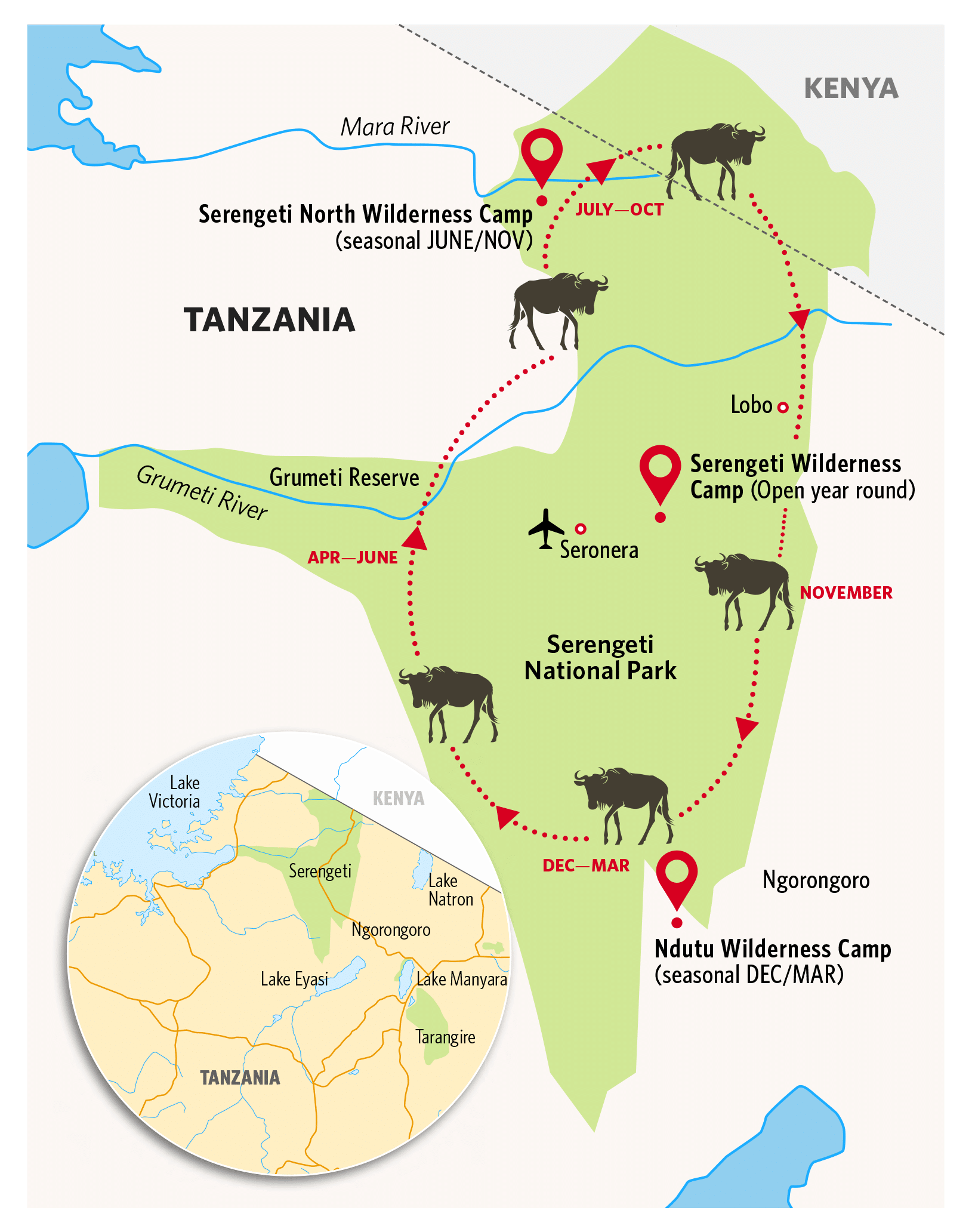
The timing of your safari is paramount when deciding between the Serengeti and the Masai Mara, as the Great Migration dictates where the herds will be. For those dreaming of witnessing the iconic Mara River crossings, where wildebeest brave crocodile-infested waters, the Masai Mara is the undisputed choice between July and October. During these months, the bulk of the migration herds have moved north into Kenya, drawn by greener pastures.
For the remainder of the year, the migration resides within the Serengeti. From January to March, the southern Serengeti plains come alive with the calving season, a tender yet dramatic period where hundreds of thousands of wildebeest calves are born within a few short weeks. This draws a high concentration of predators, offering incredible viewing opportunities. From April to June, the herds typically move through the Serengeti's western corridor, often staging dramatic crossings of the Grumeti River, a less crowded but equally thrilling experience. The rest of the year sees the herds distributed across various parts of the Serengeti, always following the rains and fresh grass.
The Safari Experience: Vehicles, Accommodation & Crowd Dynamics
Both destinations offer world-class accommodation, from luxurious tented camps to opulent lodges, all of which we can make fully kosher for your stay. However, the Serengeti generally offers more variety, including unique mobile camps that move with the migration, providing an unparalleled immersive experience. In terms of safari vehicles, most operations in the Serengeti utilize pop-top Land Cruisers, ideal for photography and game viewing. In the Masai Mara, you'll find pop-top Land Cruisers within the main reserve, while the private conservancies often use open-sided vehicles, offering an even more unobstructed view of the savanna.
Crowd levels are a significant consideration. While the Masai Mara can become quite busy, particularly around the river crossings during peak migration season, the Serengeti's immense size allows it to absorb visitors far more effectively. Even during the calving season or other peak periods, it’s often possible to find yourselves alone with the wildlife for extended periods. Both regions benefit greatly from their adjacent private conservancies, which significantly reduce vehicle traffic and provide an even more exclusive safari experience, often allowing for off-road driving and night drives not permitted in the national parks.
Investment & Logistics: Cost, Travel & Kosher Support
When it comes to the investment for your safari, Tanzania generally tends to be more expensive due to higher park fees and taxes. Kenya, particularly the Masai Mara, can offer slightly better value for a comparable level of luxury and safari quality. Travel logistics also differ: flights from Nairobi's Wilson Airport to the Masai Mara take a mere 45 minutes, making it a very accessible destination. Reaching the Serengeti typically involves a longer 1.5-hour flight from Arusha, Tanzania, often with a stop or two.
Regardless of whether you choose the Serengeti or the Masai Mara, our commitment at The Kosher Safari to providing an uncompromising glatt kosher experience remains paramount. We manage all the complex logistics of bringing in fresh, mehadrin-certified ingredients, often flying them in from Nairobi or Arusha to your remote camp. Our dedicated mashgiach ensures every meal is prepared to the highest halachic standards. Beyond the culinary, our expert team meticulously plans for full Shabbat and Yom Tov observance, arranging private davening spaces, ensuring pre-arranged hot meals, and respecting all halachic travel requirements, allowing you to focus completely on the spiritual and natural beauty of your safari.
Our Expert Recommendation for Your Kosher Safari
At The Kosher Safari, we guide our guests to the optimal destination based on their preferences and the time of year. For those whose dream safari revolves around witnessing the dramatic Mara River crossings, we highly recommend the Masai Mara between July and October. The energy and intensity of this period are truly remarkable. However, if your heart is set on the tender beauty of the calving season, the Southern Serengeti from January to March is an unparalleled experience, teeming with life and predator action.
For an overall experience that offers greater variety in terms of landscapes, accommodation options (including mobile camps), and a more private safari feel throughout the year, the Serengeti often provides a broader range of opportunities. Its vastness ensures that even during peak seasons, you can find quiet corners to enjoy the wildlife in peace. Ultimately, both destinations promise an extraordinary journey, and we are here to craft the perfect glatt kosher safari adventure tailored just for you.